
towards ace abundance
or, thoughts on asexuality, queer time, and orientations

I recently taught Sara Ahmed’s “Queer Phenomenology,” in which she puts the orienting back into sexual orientation—in simple terms, she highlights the ways in which queerness and queer bodies disrupt a space and what queerness draws attention towards. There’s a great passage my grad students pointed out where she talks about patriarchal// heteronormative dining rooms: usually a place just to entertain guests, this room is often emptied of bodies, except to perform the idea of a (cisheteronormative) family.
Straightness, the nuclear family, genealogies are usually configured through a combination of straight lines. I think back to the legendary Book my family has tracing my dad’s side of the family back fifty generations. I’ve never seen this Book, though purportedly I am in it. Some male cousin of mine has it and surely, if he has a son who bears the same last name, that person will inherit it. I think it’s cool we have such a record, but I do think about how, if I ever had children, they wouldn’t be in it. Likely my partner won’t be. The buck stops there, at me and my siblings. I talked to an aunt once about this: that the women in the family did so much care and community work within the family to keep us connected across diasporic fragmentation. Family in Canada, Australia, Guangdong, Taiwan, California, Shanghai—all connected through networks of women. Women gossiping, women organizing reunions and group chats, women outliving their husbands and taking hiking and pottery classes, women asking questions and tracing lineages and discovering friends of friends on different continents. Women who might not have gotten married, women in the Book who might not identify as women!
It got me thinking: What would a family tree not oriented around reproduction and patriarchy look like? What would a queer family tree look like—perhaps more like a garden?
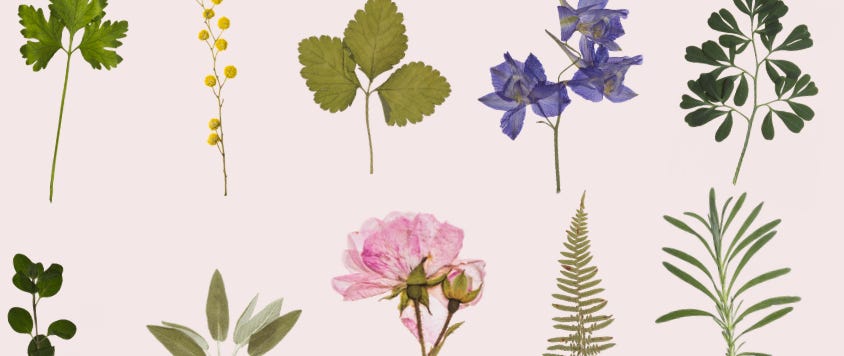
I am quite certain I am not the only or first queer—specifically ace-spectrum—person in the extended family, vertical or horizontal or diagonal, whatever that may mean. I think about those ancestors: what kinds of community and love did they experience? What kinds of magic did they weave out of what they had?
Asexuality is often framed as a lack, an absence of orientation towards—an orientation towards, as some have put it, nothing. But my life and the lives of my ace friends are filled to the brim, perhaps even overflowing with joy and art and creation. We gab, we watch TV, we swap stories. Our lines of connection are swirly and sprawling. There is loneliness, indeed, especially in this society that is so obsessed with sexuality and romance and reproduction as the only kind of futurity. But to say we are oriented towards nothing seems inaccurate when we are constantly in relation with one another. We’re always up to something.
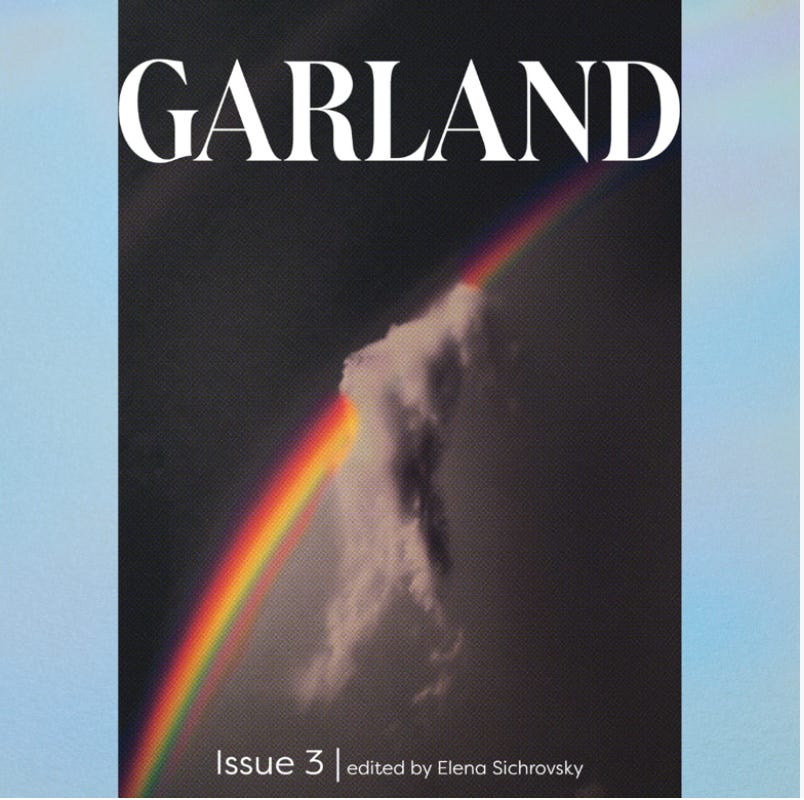
I wrote a story about aceness, magic, and ancestry in Garland issue 3. I hope you enjoy!
For access to the aroace issue: https://fifthwheelpress.com/garland
To download the digital copy: https://ko-fi.com/s/8a071156c6
For more info and resources on asexuality, check out AVEN.